
What a 2026 Website Should Include
A few years ago, a small business website could be relatively simple: an attractive home page, a list of services, an About page and a contact form. If it looked professional and appeared reasonably well in Google, it was probably doing its job.
In 2026, your website has considerably more work to do.
Potential customers may discover your business through Google, an AI-generated answer, a paid advertisement, social media or a recommendation. They may arrive on your home page — or land directly on a service page or blog article they've never seen before.
Your website needs to quickly establish who you are, what you do, who you serve and why someone should trust you.
So, what should a small business website include today?
A Home Page That Immediately Explains Your Business
You shouldn't make visitors work to figure out what you do.
Within the first few moments of arriving on your website, someone should be able to understand the service or product you provide and, when relevant, the geographic area you serve.
Your home page doesn't have to tell your entire story. Its job is to provide a clear introduction and direct visitors to the information most relevant to them.
Strong navigation, concise messaging and obvious next steps matter far more than clever language that leaves people wondering what you actually sell.

When people reach this website the contact information is clear and the image gives a good idea that this is a design business.
Individual Pages for Your Most Important Services
Trying to describe everything you do on one Services page may seem convenient, but it limits how much useful information you can provide.
Individual service pages allow you to explain each offering properly. They also give search engines and AI platforms clearer information about your expertise.
For example, instead of Makers Freelance having one page saying I provide digital marketing, I've created separate pages for Website Design, SEO & AI Search Visibility, Digital Advertising and Content Marketing.
Each service deserves enough information to answer a prospective customer's questions.
And each page creates another opportunity for the right person to discover your business.
An About Page That Actually Tells People About You
The About page is often treated as an afterthought. It shouldn't be.
Small-business customers aren't simply choosing a company. In many cases, they're deciding who they want to work with.
Tell them.
Explain your experience, how the business began, what makes your approach different and what working with you is actually like.
Credentials and awards are useful, but personality and perspective matter too. Your About page should help someone feel more confident about taking the next step.
Clear Calls to Action
Once someone becomes interested, don't make them hunt for a way to contact you.
Every important page should provide an obvious next step. Depending on the business, that might be:
Request a Consultation.
Schedule an Appointment.
Get a Quote.
Call Us.
Start a Conversation.
The wording doesn't have to be aggressive. It simply needs to make it easy for someone to act when they're ready.
Genuine Client Reviews and Testimonials
You can tell visitors you're good at what you do.
It's much more powerful when your clients tell them.
Reviews provide reassurance and demonstrate that real people have trusted your business and had a positive experience.
Use genuine testimonials throughout your website rather than hiding all of them on one Reviews page. When possible, match them to the subject of the page — a website-design testimonial on a website-design page, for example.
Specific reviews are particularly valuable. “Wonderful to work with” is lovely. A client explaining what you did and what changed as a result tells a much stronger story.
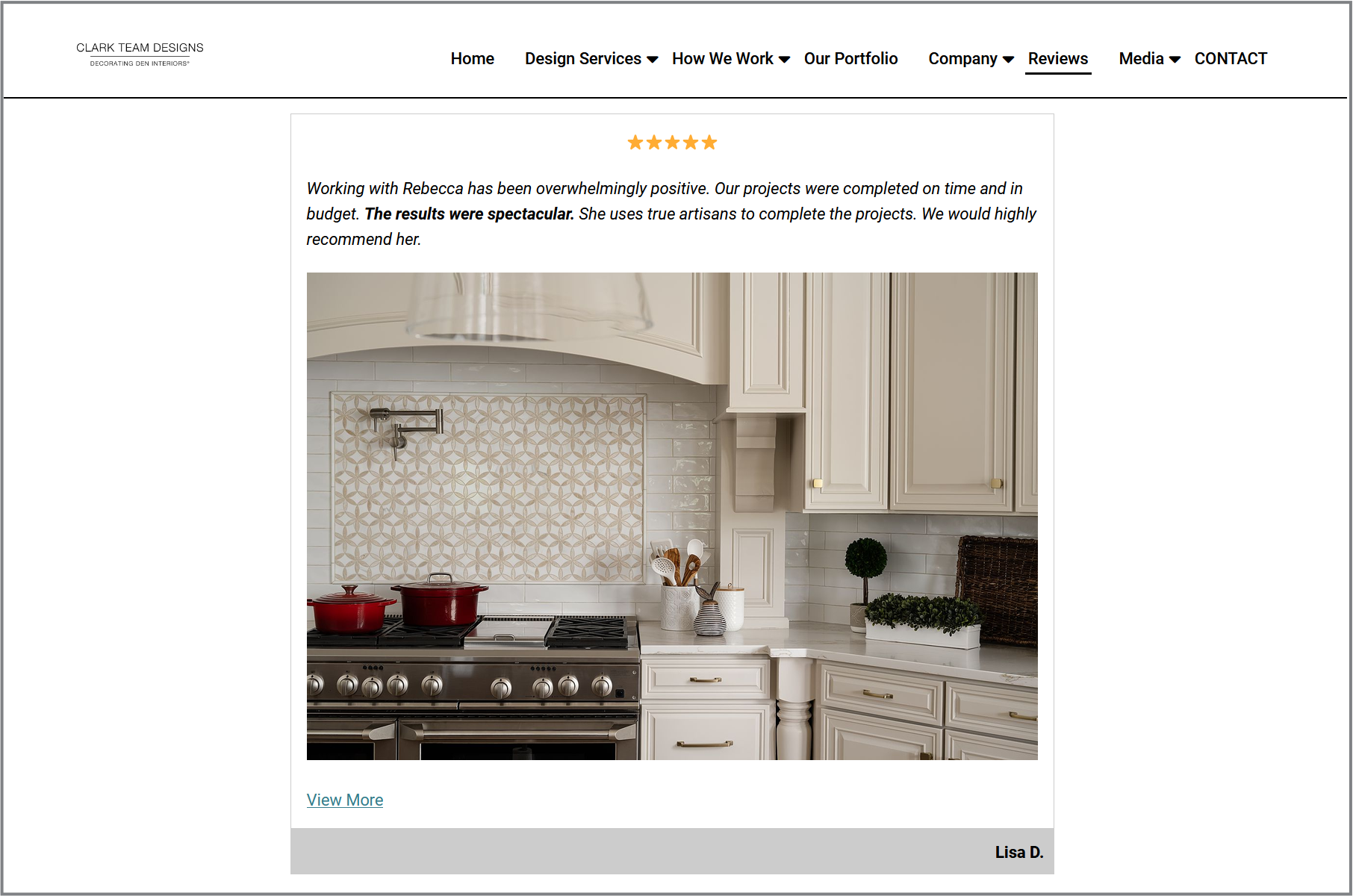
A review with an image, link to the project and highlighted text draws people’s attention to this designer website.
Frequently Asked Questions
FAQs aren't just for customer service.
They allow you to address concerns that might otherwise prevent someone from contacting you. They also provide natural opportunities to explain your services in greater detail and answer the conversational questions people increasingly use when searching online.
Think about the questions your customers actually ask:
How much does it cost?
What happens first?
How long will it take?
What areas do you serve?
Do I need to do anything before we start?
If customers repeatedly ask you something, there's a good chance the answer belongs somewhere on your website.
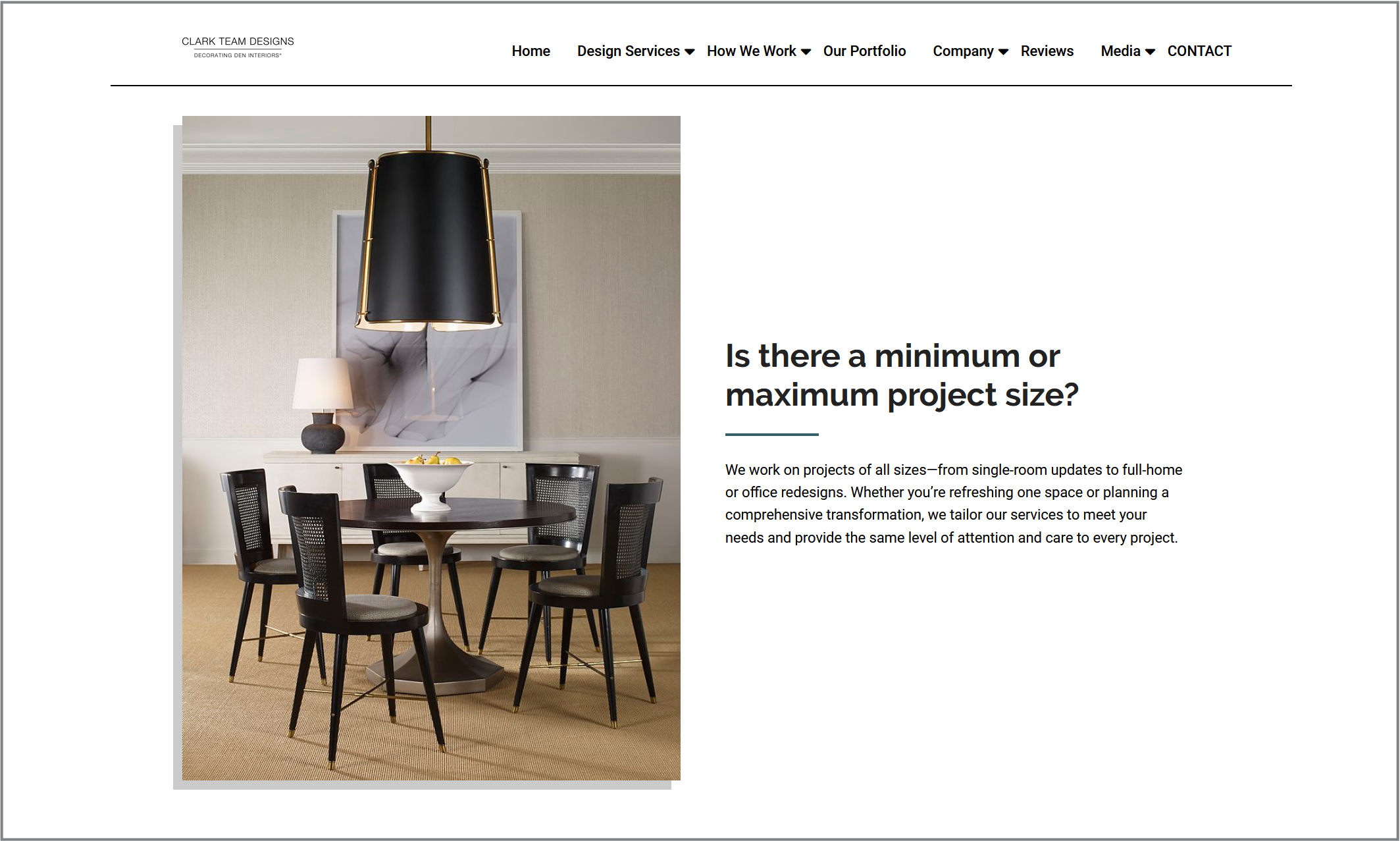
What do clients always ask? Save time by answering those questions on your FAQ page.
Useful, Original Content
This is where a blog can become valuable — provided you have something worthwhile to say.
A blog shouldn't exist simply because someone told you it was good for SEO.
Use it to answer customer questions, explain complicated subjects, share expertise, discuss changes within your industry or help potential customers make better-informed decisions.
That's exactly why you're reading the first article on the Makers Freelance blog.
I didn't add a blog simply to make the website larger. I added it because digital marketing is changing quickly, and there are subjects that deserve more explanation than I can reasonably include on a service page.
Location and Service-Area Information
If your business serves a particular geographic market, say so clearly.
Don't assume Google — or your visitors — knows where you work.
Your address, service areas and location-specific information can help establish the geographic relevance of your business. For companies covering multiple markets, thoughtfully written location pages can also be useful.
That doesn't mean creating 100 virtually identical pages and swapping out the city name.
Useful local content should actually be local.
A Website Designed for Mobile Visitors
Your website cannot simply look good on your desktop computer.
Visitors will view it on phones, tablets, laptops and screens of all different sizes. Navigation needs to remain easy, text needs to be readable and forms and buttons need to work without requiring a magnifying glass.
This is something I was reminded of while building this very website.
A layout that looked perfect on my desktop didn't necessarily behave the same way on another screen. Responsive website design means allowing the page to adapt rather than forcing elements into position for one particular screen size.
Check your own website on your phone occasionally. You might be surprised by what you find.
Fast, Simple Ways to Contact You
Contact forms have their place, but don't make them unnecessarily complicated.
Do you really need someone's mailing address, company size, annual revenue and twelve other pieces of information before you've even spoken?
Probably not.
Ask for what you genuinely need to begin the conversation.
And if you want people to telephone you, make the phone number easy to find — and clickable on a mobile device.
Analytics and Measurement
You should have some idea what your website is doing.
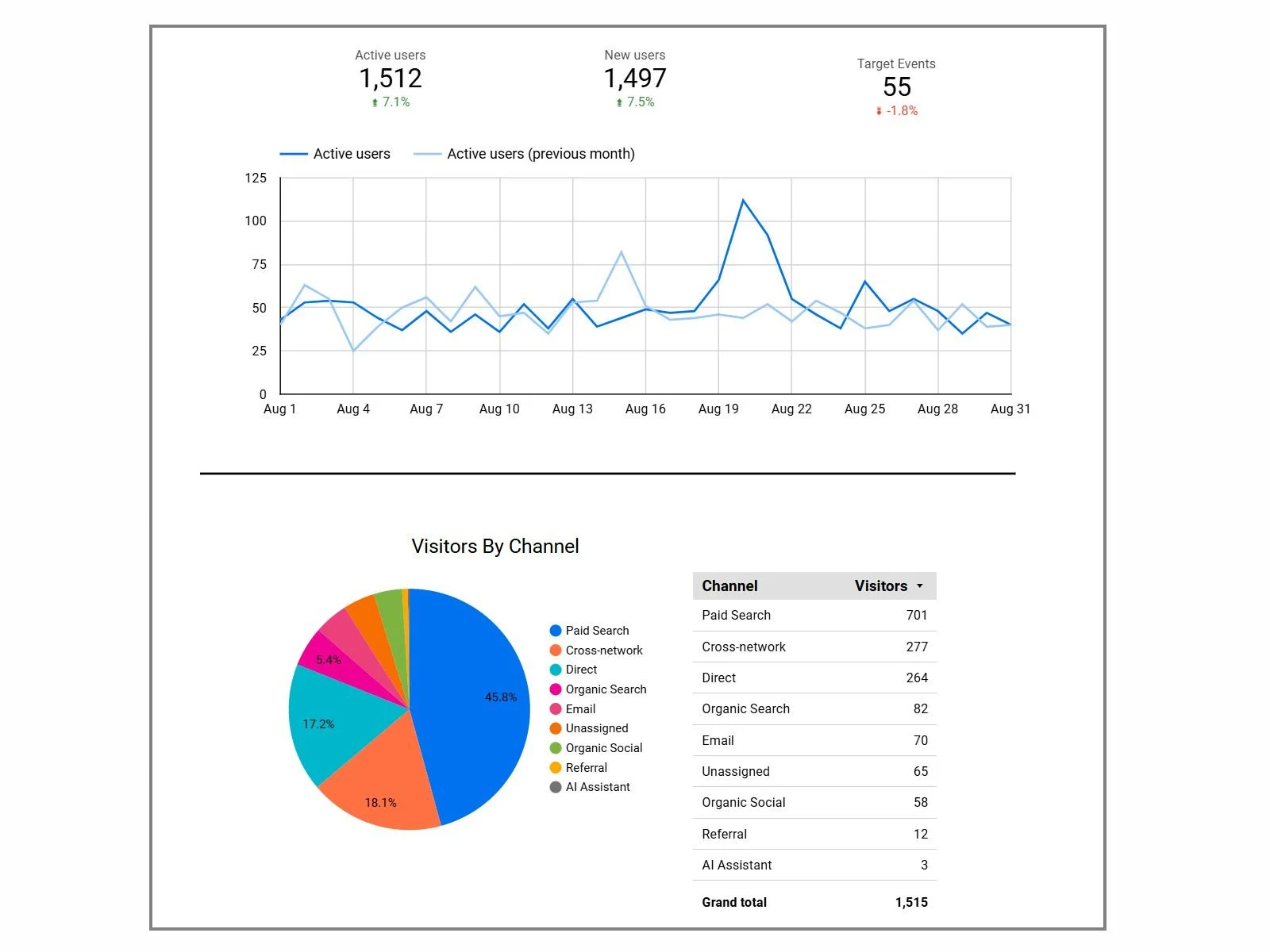
Analytics can help you understand how people find the site, which pages they visit and how they interact with your content.
Google Search Console can provide additional information about your visibility in Google search, while other tools are beginning to help businesses understand their presence in AI search.
You don't need to obsess over every number.
You do need enough information to distinguish between “I think my website is working” and “I have evidence that my website is working.”
Content That AI Platforms Can Understand
This is the newest addition to the list.
Search is no longer confined to a traditional search-results page. People are increasingly asking detailed questions of AI-powered search and conversational platforms.
There isn't a special switch you can turn on to make your business appear in AI answers.
The fundamentals are remarkably familiar: create clear, useful information about your business; demonstrate genuine expertise; describe your services accurately; answer relevant questions; maintain consistent business information; and build a credible presence online.
In other words, don't create your website solely for AI.
Create an excellent website for people that technology can also understand.
A Website That Reflects the Business You Have Today
Perhaps this is the easiest one to overlook.
Businesses change.
Services are added. Geographic areas expand. Team members change. Awards are won. Photographs become dated. Phone numbers change. And sometimes the business gradually evolves into something quite different from the one described on the website five years ago.
Your website isn't something you finish.
It should evolve with your business.
Take a fresh look at yours occasionally and ask:
If someone knew nothing about my company and visited this website today, would they come away with an accurate picture of the business I actually have?
If the answer is no, it may be time for an update.
Your Website Should Be Working for You
A small-business website in 2026 needs to do much more than provide an attractive online brochure.
It needs to establish credibility, explain your expertise, support search visibility, answer questions, work beautifully across devices and make it easy for the right people to contact you.
You don't necessarily need more pages, more technology or more marketing.
You need the right information, presented clearly, working together.
And that's ultimately what a good small-business website should do.